

Hans Obermilleracher looks at the next steps in a company’s technological strategy
The rapid evolution of data processing is fundamentally reshaping how infrastructure is designed, deployed and managed. While cloud computing and hyperscale data centres continue to play a central role, the growing demand for real-time processing, reduced latency and data sovereignty is pushing compute capabilities closer to the point of data generation.
This shift has elevated edge computing from a niche architectural concept to a critical operational requirement across industries.
Edge environments, ranging from retail stores and bank branches to logistics hubs and smart city installations, are now integral to business continuity. In these distributed locations, infrastructure must deliver deterministic performance, high availability and secure operation despite physical and operational constraints. Designing for these conditions requires a fundamentally different approach than traditional data centre environments.
The operational imperative of the edge
Edge computing is often associated with emerging technologies such as artificial intelligence (AI), IoT and 5G. However, its most immediate impact is operational rather than experimental. In environments such as supermarkets or financial branches, uptime directly correlates with revenue and customer experience. Payment systems, inventory platforms and transaction processing must operate continuously without interruption.
Unlike centralised data centres, edge deployments are typically embedded in facilities not originally designed for IT infrastructure. These locations often have limited space, constrained power availability and little or no on-site technical expertise. As a result, infrastructure must be inherently resilient, simplified and remotely manageable.
Latency and bandwidth considerations are primary drivers of this shift. Processing data locally reduces the need to transmit large volumes of information to central systems, enabling faster decision making and improved application responsiveness. Additionally, regulatory frameworks such as GDPR increasingly require data to be processed closer to its source, reinforcing the need for distributed architectures.
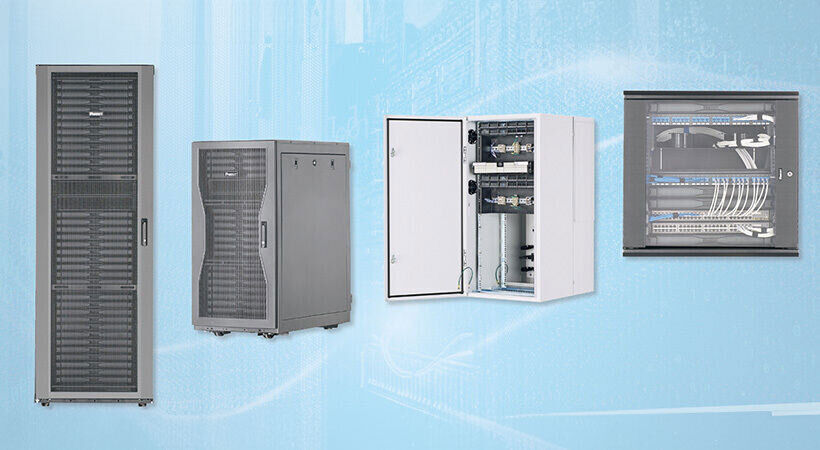
A typical edge deployment is compact, often consisting of two to three cabinets housing compute, storage and networking equipment alongside supporting infrastructure. Despite this small footprint, expectations are high. Systems must provide enterprise grade reliability, security and performance while operating with minimal maintenance.
These deployments must also accommodate variability. Some sites may operate at relatively low power levels, while others, particularly those supporting AI workloads, may require significantly higher densities. This variability demands flexible yet standardised infrastructure models that can scale without introducing complexity.
Importantly, physical infrastructure, cabinets, power systems, cabling and airflow management, typically represents around 20% of deployment costs but has a disproportionate impact on overall reliability and efficiency. Treating these elements as an integrated system rather than discrete components is essential for long-term performance.
Power architecture and resilience
Power is one of the most critical constraints in edge environments. Unlike large data centres with redundant utility feeds and backup generators, edge sites often rely on limited electrical capacity. Ensuring continuity under these conditions requires carefully designed power architectures.
Typical installations incorporate uninterruptible power supplies (UPS) ranging from 6 to 15 kVA, providing short-term runtime, often around 10 minutes, to maintain operations or enable controlled shutdowns during outages. Battery technologies vary, with VRLA remaining common due to cost, while lithium-ion solutions offer improved lifecycle performance and total cost of ownership.
At the rack level, power demands can range from approximately 3 kW to 15 kW or higher, depending on the application. As workloads become more compute-intensive, particularly with AI, these figures are expected to increase significantly.
Visibility into power usage is therefore essential. Intelligent power distribution units (PDUs) provide real-time monitoring at the outlet level, enabling operators to balance loads, optimise capacity and detect anomalies before they lead to failures. This level of insight is particularly important in distributed environments where on-site intervention is limited.
Connectivity infrastructure at the edge must balance immediate performance requirements with future scalability. Many current deployments operate at speeds between 10G and 50G, but increasing data volumes and application complexity will drive demand for higher bandwidth.
Structured cabling systems play a critical role in enabling this scalability. By standardising connectivity across sites, organisations can reduce deployment variability, simplify maintenance and improve troubleshooting efficiency.
Edge environments typically combine fibre and copper connectivity to support both high-speed data transmission and flexible device integration. Pathway systems, including cable management and routing solutions, are equally important in maintaining organisation and ensuring consistent performance.
The challenge lies in designing connectivity that is both technically robust and operationally simple. Given that many edge sites are managed by non-specialist personnel, infrastructure must be intuitive, clearly structured and easy to maintain.
Thermal management in constrained spaces
Cooling is often underestimated in edge deployments but becomes increasingly critical as power densities rise. In confined environments, inefficient airflow can quickly lead to thermal hotspots, impacting performance and reducing equipment lifespan.
Many network devices utilise side-to-side airflow patterns, which can exacerbate recirculation issues if not properly managed. Without adequate airflow control, hot exhaust air can be drawn back into equipment, increasing internal temperatures and energy consumption.
Effective thermal management strategies include the use of airflow ducting, containment systems and optimised cabinet design. Accessories such as air ducts can significantly improve cooling efficiency by directing airflow and separating hot and cold air streams.
Security in distributed environments
Security is inherently more complex at the edge due to the distributed nature of deployments and their exposure to less controlled environments. Both physical and cybersecurity measures must be integrated into infrastructure design.
Physical security includes controlled access mechanisms such as locks, access cards or PIN systems, ensuring that only authorised personnel can interact with equipment. Environmental monitoring, tracking temperature, humidity and access events, provides additional layers of protection.
Cybersecurity compliance with recognised standards such as IEC 62443 or UL 2900 is increasingly important, particularly in regulated industries. Network-level protections, including authentication protocols and segmentation, further reduce risk.
Given the scale of edge deployments, security solutions must also support centralised management and monitoring to maintain consistency across all sites.
One of the most effective strategies for managing edge infrastructure at scale is standardisation. Organisations operating hundreds or thousands of sites benefit significantly from deploying consistent architectures across all locations.
Standardised designs typically include predefined cabinet configurations, power setups, connectivity layouts and cooling strategies. This approach enables faster deployment, simplifies maintenance and reduces the likelihood of human errors.
Global standardisation also offers economic advantages. Using uniform components across multiple sites increases purchasing volumes, leading to better pricing and simplified supply chain management. Critically, standardisation does not eliminate flexibility. Instead, it provides a modular framework that can be adapted to specific site requirements while maintaining overall consistency.
Edge infrastructure must be designed with its full lifecycle in mind. Deployment is only the initial phase; ongoing monitoring, maintenance and support are equally important in ensuring long-term reliability. Key lifecycle considerations include site assessment and planning, installation and commissioning, preventive maintenance, remote monitoring and management.
In distributed environments, remote capabilities are particularly important. Infrastructure must support integration with monitoring systems, enabling centralised visibility into performance, power usage and environmental conditions.
This reduces the need for on-site intervention and allows organisations to proactively address issues before they impact operations.
The impact of AI and future requirements
The increasing adoption of AI at the edge is set to significantly alter infrastructure requirements. AI workloads demand higher compute power, increased bandwidth and greater energy consumption.
This shift will drive:
- Higher rack power densities
- Increased cooling requirements
- Larger UPS capacities
- Greater overall energy demand
What is currently a modest edge deployment may evolve into a high density micro data centre. Infrastructure must therefore be designed with scalability in mind, ensuring it can accommodate future demands without requiring complete redesign.
Edge computing is often discussed in terms of the applications it enables, but its success ultimately depends on the infrastructure that supports it. In distributed environments, where conditions are less controlled and expectations are uncompromising, the physical layer becomes a critical enabler of performance and reliability.
Effective edge deployments require an integrated approach, combining power, connectivity, cooling and security into a cohesive system. Standardisation, scalability and lifecycle management are essential for maintaining consistency across multiple sites.
As the data processing landscape continues to evolve, driven by AI, 5G and regulatory requirements, the importance of robust edge infrastructure will only increase. Organisations that invest in well-designed, repeatable and adaptable edge architectures will be best positioned to meet the demands of a rapidly changing digital environment.