

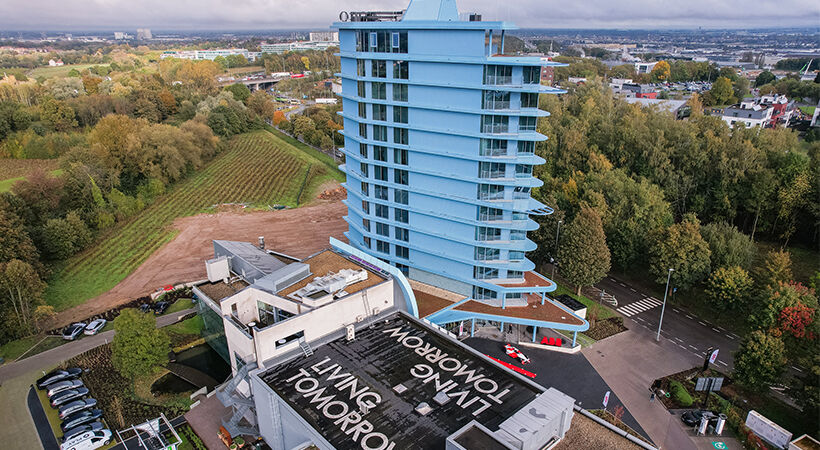
Aldo Sciacca, R&D and portfolio manager, ABB Electrification’s Smart Buildings Division, explains why hidden energy infrastructure, innovation and R&D are helping to drive decarbonisation, enabling digitalisation, interoperability and predictive technology to reshape energy management in buildings.
I often tell people that the smartest part of a building is the part you never see. If you are reading this in an office, a hotel or at home, chances are the systems doing the hardest work are hidden behind walls, panels and switchboards – quietly keeping everything running, efficiently and reliably.
The invisible infrastructure is where performance, efficiency and resilience begin and where much of today’s R&D innovation is happening. In research facilities and boardrooms, technology experts are working with building owners and industry partners to advance energy distribution, infrastructure intelligence and interoperability.
These foundations matter more than ever – and we are only just starting to appreciate how critical they really are. With buildings accounting for around 26 percent of global energy-related emissions, smarter, more connected infrastructure is becoming increasingly critical to hitting global sustainability and decarbonisation targets. In many ways, it is now the hidden enabler of Net Zero.
Smart infrastructure drives sustainability and guest comfort in hotels
Hospitality is one of the sectors where this invisible infrastructure matters most. I have seen hotels invest heavily in guest-facing technology, only to struggle because the underlying electrical systems weren’t designed to support it. Comfort, efficiency and reliability don’t come from apps and dashboards alone – they come from what sits underneath.
For this reason, hotels are emerging as a testbed for how smart energy systems powered by hidden infrastructure can satisfy both client and customer needs. This is the part that is often overlooked.
Hidden energy infrastructure has to match the operational realities of a hotel and its location. It is not enough to install technology; the underlying electrical and energy systems must be reliable, adaptable and ready to generate usable data. Sensors, connected systems and real-time insights enable operators to optimise energy use while maintaining guest comfort. After all, there is no gain from energy savings if guest comfort is compromised.
What makes this possible is not the guest-facing technology but the systems underneath. A well-designed infrastructure keeps lighting, heating, ventilation and air conditioning (HVAC) and digital services running seamlessly, while giving hotel operators clear visibility into how the building is performing. When the data is simple and actionable, sustainability becomes much easier to deliver day to day.
A good example of this kind of integration in practice is the Living Tomorrow Innovation Campus in Belgium. Its 92-room hotel is part of a wider showcase on sustainable living, but the real innovation sits behind the scenes in how the building’s core electrical architecture and energy-management systems work together. Supported by real-time data and intelligent controls, this integrated setup helps operators balance comfort, efficiency and sustainability.
Residential building innovation and open standards
R&D, innovation and energy infrastructure are also central to progress in the residential sector, giving building operators, facilities managers and residents greater control over the energy they use.
At Brobyholm, a new ‘exurb’ just beyond the suburbs near Stockholm in Sweden, the energy system operates as a connected neighbourhood ecosystem. Property operators can run diagnostics on existing appliances to detect inefficiencies or emerging faults, while also monitoring key electrical assets in real time and coordinating solar PV production, grid tariffs and consumption patterns through virtual energy sharing. This is infrastructure intelligence in action: a predictive, connected system that helps an entire community manage energy more efficiently.
Open global standards for building automation such as KNX continue to play an important role here, enabling supplier-independent systems that simplify integration, support interoperability and reduce complexity.
Collaboration matters too. Industry partnerships and joint innovation initiatives help accelerate new approaches, blending the technical capabilities of established vendors with the agility and fresh thinking of startups.
The role of technology in circular retrofitting
Upgrading our existing infrastructure is as important as developing new “green” builds. Retrofitting is also a significant economic opportunity, with the retrofit market set to grow from $500 billion today to $3.9 trillion by 2050.
The EU’s Renovation Wave, for example, aims to renovate 35 million buildings by 2030, doubling the annual rate of energy renovations in the EU. In Europe and worldwide, R&D again has a major role to play, creating modular, scalable solutions that make modernisation practical for older properties.
From an R&D perspective, this is where digitalisation becomes essential. Digital twins, automated diagnostics and AI-driven energy management allow us to understand how a building performs today and make far more confident decisions about what to upgrade tomorrow.
These tools give a clearer, simpler picture of where to focus first and make retrofitting more predictable, more efficient and far less disruptive - exactly what we need if we want to modernise buildings at scale.
Build on strong foundations
Digitalisation, interoperability and predictive intelligence are changing how we manage electrical energy in buildings. However, to make these advances count, we need to reduce complexity and make modernisation scalable. That applies not only to new developments, but also to the older properties that make up most of our global building stock. These existing buildings will ultimately determine the speed of the energy transition.
Smart buildings - when underpinned by energy infrastructure at the design stage – are therefore best-placed to use interconnected technologies such as AI, the IoT and machine learning to improve comfort and performance. This applies across all functions, from energy management, water consumption, heating, ventilation and air conditioning, to lighting, remote monitoring and communication networks.
These web-based platforms allow the facility systems to integrate seamlessly with each other, delivering a single view of how efficiently and effectively a building operates. Armed with this data, managers can take proactive steps to avoid waste and improve use through predictive rather than reactive maintenance to identify potential issues before they occur – minimising downtime, emissions and costs.
This shift is already happening. The global market for predictive maintenance is set to grow from $10.6 billion today to $47.8 billion by 2029 - a clear sign that operators are moving from reactive fixes to proactive, data-driven system intelligence.
The hidden enabler of Net Zero
In my experience, the path to Net Zero doesn’t start with what we see, it starts with what we design, connect and future-proof behind the walls.
When we invest in strong energy infrastructure and thoughtful R&D, we give buildings the ability to adapt, improve and decarbonise over time. Quietly, reliably and at exactly the scale the energy transition demands.