

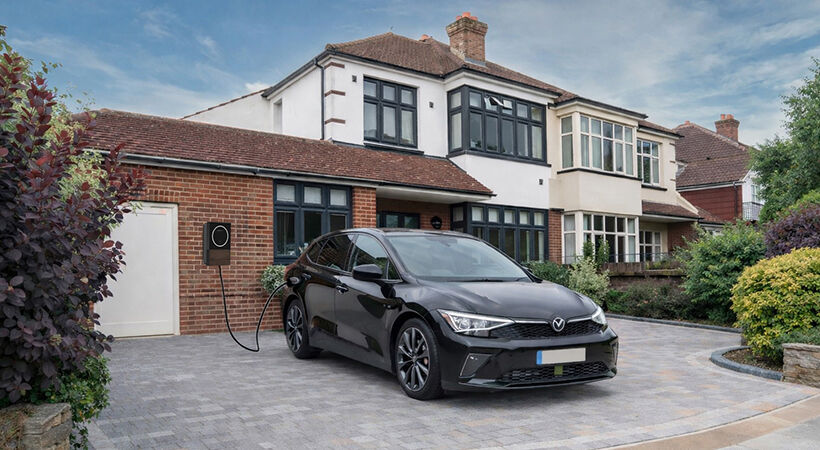
Humax EV Charging has announced a strategic partnership with Rightcharge to deliver a smarter, more transparent and scalable home charging solution for UK fleets.
With this new agreement, the integration of the Humax MX7 Vehicle-to-Grid* ready EV charger with the Rightcharge payments platform creates a unified ecosystem for business charging at home. The system supports company cars, fleet vehicles and business-owned vehicles, while ensuring accurate reimbursement and full separation between business and personal use.
Traditional home EV charging reimbursement often relies on estimates or trust-based reporting, leaving businesses exposed to ‘grey’ charging costs where personal vehicles may be charged on company accounts. The Humax MX7 addresses this through advanced vehicle identification using ISO 15118-compliant PLC technology. The charger recognises a vehicle’s unique ID as soon as it is plugged in. If the vehicle does not match the registered company car, the Rightcharge platform can automatically ring-fence the cost or block the transaction. This ensures a clear separation between business and personal charging. As a result, fleets benefit from greater transparency, accuracy and control over home charging reimbursements.
Beyond fleet applications, the integration also enhances security for private Humax MX7 owners. Through the Humax Charge app, users can enable a ‘registered-only’ charging mode that allows them to pre-authorise specific vehicles. If an unrecognised vehicle is connected to the charger – for example a neighbour’s car or an unauthorised user – the system can automatically block the charging session and notify the homeowner via their smartphone. This feature helps protect against unauthorised energy use, while ensuring the charger remains a secure household asset.
Thanks to the MX7, vehicle identification takes place at the charger level. This makes the solution revolutionary in its ability to bring a wider mix of vehicles into the reimbursement ecosystem, rather than limiting participation to specific models. Fleet managers can therefore scale reimbursement programmes more easily across mixed fleets.
The partnership also delivers significant benefits for fleet drivers. Charging at home is substantially cheaper than public charging and avoids the time lost waiting at public charge points during working hours. Drivers gain convenience, faster reimbursement and no out-of-pocket expenses, while businesses benefit from reduced operational costs.